

Black Lives Matter. Black stories matter. The story of what we do now matters.
12/06/2020Featured Story
On
Stories are powerful. At IofC, story sharing has been a powerful tool for change. Stories inspire those who listen and give them the chance to gain a new perspective, to put themselves in the teller’s shoes. Sharing also gives greater insight to those who tell their stories. The process makes us all realize that the stories of the marginalized are also part of our stories, and that indeed we are all part of the same story.
However, stories are often told by those in power. Some stories are not told. Some stories are adapted or even erased.
‘As an African American I have learned that in my own country some people tend to erase our history,’ Shalisa Hayes from the US told us in 2018. The Founder and Executive Director of the Billy Ray Shirley III Foundation came to Caux twice to tell the story of the son she lost to gun violence.
Two years later, her words have fresh power in the aftermath of the killing of George Floyd. His story will not be erased, because so many have identified with it and decided to share it. It has travelled the world and resonated internationally, because it wasn’t an isolated story. Not in the US, not in the world. The story of racism is a truly global story: one that everyone has a part in telling.
In Switzerland too, racism is present. A recent report by the European Commission against Racism and Intolerance states that in Switzerland ‘institutional and structural racism continues to be a problem in the police. It manifests itself in racial profiling and identity checks targeting notably persons with itinerant ways of life and Black persons.’ The story of racial discrimination and of white privilege is international.
It is disheartening to see how prevalent race discrimination still is in our societies today. The recurring absence of justice for the black victims of senseless killings forbids complacency. Our hearts go out to all who suffer systemic brutality and racial injustice.
It is up to each and every one of us to create a new story and to commit ourselves to bringing about a sustainable society that rejects discrimination and promotes ethical leadership. We must all consider what we can do in our own lives to address imbalances of power and work for a future in which systemic racism has no part.
The theme of this year’s Caux Forum Online is ‘Shaping our future together’. We commit to providing a platform where all voices can be heard, where all stories can be told, and where together we can write a new more inclusive story. The Tools for Changemakers conference is readapting its programme to highlight the role of dialogue in addressing racism. It will create space for participants to share their personal experiences of privilege and discrimination.
Black lives matter. Not just because it is part of the story that we at Initiatives of Change want to be telling, but simply because it is part of our common story of humanity. Come share this story, come share your story.
The Initiatives of Change Switzerland Team and Council
If you’d like us to share your story on our website or social media, please send us an email.
Topics
Event Categories
Job Offer
Off
related stories
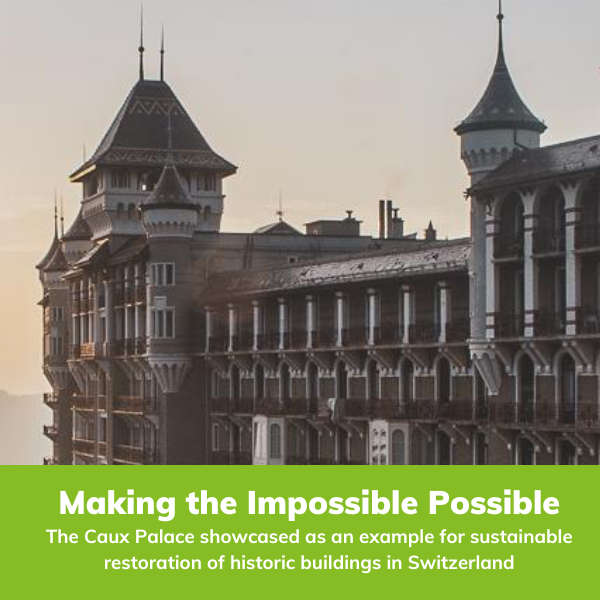
Making the Impossible Possible
In its current edition, the top real estate magazine in French-speaking Switzerland, immobilier.ch, showcases the Caux Palace as one of five positive examples of how historic buildings can be preserve...
Lost in Translation: Volunteering at the Caux Refuge
When the first Ukrainians arrived at the Caux Refuge, Eliane and Andrew Stallybrass were amongst the first volunteers to welcome them at the Villa Maria and to offer their support. Eliane knew that le...
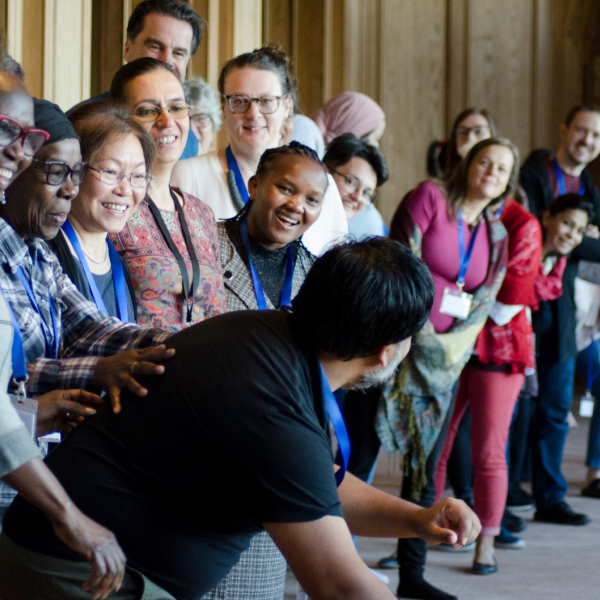
Training of Trainers and Facilitators in Caux: 'Only the beginning'
What happens when 26 IofC trainers and facilitators from 12 countries embark on a three-day learning journey in Caux on designing and facilitating participatory learning experiences? At the opening se...
Our Annual Report 2021 now available!
We are happy to present our Annual Report 2021, covering all of last year's activities and the celebrations of 75 Years of Encounters!...
Caux in the Belle Epoque
Sunday 19 June 2022 saw crowds of visitors and local people gathering in the park of the Caux Palace for the inauguration of a ‘Caux Belle Epoque’ self-guided walk. ...
Jacqueline Coté to become President of IofC Switzerland in April 2022
Christine Beerli will step down as President of the Foundation of Initiatives of Change Switzerland in April 2022, after four years in the role. Jacqueline Coté, former Director of Public Relations at...
Andrew Lancaster: Responsibilities without borders
Former President of the Council of IofC Switzerland, Antoine Jaulmes, interviews Andrew Lancaster from Australia, who has just stepped down from the Council after 16 years....
Nick Foster becomes Co-Director General of Initiatives of Change Switzerland
Nick Foster, until now Caux Forum Director, will take over the role of Co-Director of IofC Switzerland, alongside Stephanie Buri. After nine years with Initiatives of Change (IofC) and one year as the...

1948 - Paul Misraki: Soundtrack for a new Germany
Germany was in ruins. Europe was in ruins. Millions had been killed; millions more wounded and displaced. There were also ruins of the mind, deep collective trauma in desperate need of healing. In the...
1947 - Peter Petersen: ‘All our defences crumbled’
‘At that time, even a dog would have refused a bit of bread from the hand of a German,’ remembered Peter Petersen, one of 150 Germans who the Allies allowed to come to Caux in 1947. They were some of ...
1946 - Trudi Trüssel: ‘You can’t build with only one class’
"Deep down inside, I blamed the rich, I held them responsible for so many people’s unhappiness. I couldn’t accept that some could have everything they wanted without having to lift a little finger, wh...
75 years, 75 stories
"My story is not special, or mine. It belongs to this conference centre. It is 75 years long and contains hundreds of thousands of train rides, walks, talks, teas, conversations, and quiet moments of ...
Survey: How can we serve you best?
We are committed to inspire, equip and connect you to support you on your journey from personal to global change. But we need your help to see how we can do this best!...

Swiss National Day in the gardens of the Caux Palace
Usually, Swiss National Day on 1 August is an opportunity for Caux Forum participants to discover some Swiss traditions, including cheese fondue. This year, it looked like the Caux Palace would be emp...
Discover the Annual Report 2019
Our Annual Report 2019 is now available! Discover our activities and relive the highlights of the Caux Forum 2019....
related events
Isabella Phoenix
Isabella Phoenix’s affinity for people and teams is the foundation of her talent for nurturing organizations in the corporate, art and NGO worlds.
For the past 30 years Isabella has led global multi-functional teams in HP, Nestlé and Exxon. She led the Middle East & Africa retail division of Hewlett-Packard (HP), worth US$800 million, to double-digit growth and successfully led the HP Omnichannel Transformation. She is now Senior Manager of HP’s innovative Global Channel capabilities and enablement organization.
Brendan Kelly
Brendan Kelly is the Global Head of Leadership and Professional Development and Head of the Wealth Institute for Crédit Suisse AG. Crédit Suisse has a workforce of 76,000 people located in 50 countries. It serves private and corporate clients through its Wealth Management, Asset Management and Investment Banking businesses.
Summer Academy on Land, Security and Climate - Programme
programme
Wednesday, 01 July
14:00 - 15:00 (CEST)
Plenary 1: Anticipating the security risks of land degradation and climate
Chair: Anna Brach
- Strategic Foresight Team, GCSP
- Olli Brown, Associate Fellow on Climate and Security, Chatham House, UK
- Dr BIshnu Upreti, Executive Director, Institute of International Studies, Nepal
Thursday, 02 July
10:00 - 11:00 (CEST)
Plenary 2: Community Action: entry-point to holistic solutions
Chair: Louise Brown
- Oumar Sylla, Regional Director for Africa, UN Habitat, Senegal
- Tony Rinaudo, World Vision, Australia
- Maxi Louis, Director, Namibia Conservancies
- Himanchu Kulkarni, Executive Director, ACWADAM, India
Friday, 03 July
14:00 - 15:00 (CESET)
Plenary 3: Climate Finance: catalyst of holistic solutions
Chair: Dr Irina Fedorenko
- Gareth Phlillps, Senior Manager, Green Growth, African Development Bank, UK
- Chau Duncan, COO, Earthbanc, Australia
- Rishabh Khanna, ILLP
- Dr Dhanasree Jayaram, Manipur University, food and climate, India
Saturday, 04 July
00:00 - 00:00
Workshops
Details to be confirmed.
Sunday, 05 July
00:00 - 00:00
Workshop
Details to be confirmed.
Please note that this programme is subject to change. For technical reasons the Caux Forum Online will be held mainly in English with some sessions in French. No interpretation will be offered. Thank you for your understanding.
Caux Dialogue on Environment and Security - Programme
-
1 - 4 July: Panels
-
5 - 19 July: Workshops & Community Building
programme
Wednesday, 01 July
14:00 - 15:00 (CEST)
Plenary 1: Anticipating the security risks of land degradation and climate
Climate change and land degradation pose potentially devastating threats to human security. Can we anticipate future scenarios? What will it take to respond accordingly? Three global experts from France, Nepal and UK shed light on questions that will affect the future of humanity.
With:
- Dr Thomas Gauthier, Professor of Strategy, Emlyon Business School, France
- Oli Brown, Associate Fellow, Chatham House (The Royal Institute of International Affairs) and Geneva Centre for Security Policy (GCSP)
- Dr Bishnu Raj Upreti, Advisor, Nepal Centre for Contemporary Research, Kathmandu
Chair:
- Anna Brach, Head of Human Security, Geneva Centre for Security Policy
Thursday, 02 July
10:00 - 11:00 (CEST)
Plenary 2: Community Action: entry-point to holistic solutions
From villagers replenishing groundwater in India to pastoralists mapping land rights in Darfur; from farmer-managed natural regeneration in Niger to communities managing wildlife in Namibia: durable solutions are based on effective community action. Meet practitioners from Australia, India, Namibia and Senegal who are leading the way in catalyzing community-based solutions.
With:
- Oumar Sylla, Acting Director for the Regional Office for Africa in the United Nations Human Settlements Program (UN-Habitat)
- Tony Rinaudo AM, Senior Climate Action Advisor, World Vision Australia
- Maxi Louis, Director of the Namibian Association of Community-Based Natural Resource Management Support Organisations (NASCO)
- Dr. Himanshu Kulkarni, Executive Director, Advanced Center for Water Resources Development and Management (ACWADAM), India
Chair:
- Louise Brown, Climate Finance Specialist, Namibia
15:00 - 16:30 (CEST)
Plenary 3: Sustainability risks in the Pharmaceutical Industry in the context of COVID 19
This plenary will dive into the challenges and opportunities for sustainability in the pharmaceutical industry, in the context of COVID 19. We will draw on diverse perspectives from industry and civil society on the sustainable production and consumption of medicines. The dialogue will highlight antibiotic resistance as one of the most pressing challenges facing the world. Lastly we will touch upon technical, political and legal solutions and explore how we can use the current crisis to transform the sector by building a more transparent supply chain.
With:
- P Niroop Reddy, Environmental Lawyer, Advisor to EnvirohealthMatters
- Cecilia de Pedro, Head of Sustainability, Apotek Hjärtat
- Bengt Mattson, Policy Manager, Swedish Association of Pharmaceutical Industry
- Nicolai Schaaf, Programme Manager, Swedish Water House, SIWI (Stockholm International Water Institute)
Moderator:
- Rishabh Khanna, Executive Committee, Initiatives for Land, Lives and Peace
Friday, 03 July
14:00 - 15:00 (CEST)
Plenary 4: Climate Finance: catalyst of holistic solutions
Global resources are streaming into efforts to mitigate and adapt to climate change. How can such efforts benefit the world’s poorest? Expert practitioners and scholars from the African Development Bank, Earthbanc and pioneering academic centres will share insights and prospects.
With:
- Gareth Phillips, Manager, Climate and Environment Finance Division, African Development Bank
- Chau Duncan, Chief Operating Officer, Earthbanc, Australia
- Rishabh Khanna, Executive Committee, Initiatives for Land, Lives and Peace
- Dr Dhanasree Jayaram, Assistant Professor, Manipal Academy of Higher Education, India
Chair:
- Dr Irina Fedorenko, Managing Director Caux Dialogue on Environment and Security
Monday, 06 July
17:00 - (CEST)
Workshop 1: Rural Futures: Ecosystem Restoration for Universal Basic Assets in the Eastern Himalayas
The Eastern Himalayan region stretches across two biodiversity hotspots and over 220 indigenous communities, prompting a battle for resources where human aspirations threaten the region’s biodiversity. The Rural Futures model reconciles these human and biodiversity needs through promoting habitat-mediated livelihoods for indigenous communities, thereby alleviating the economic incentives to destroy habitats. The programme enhances natural assets, creating a system for sustainable natural capital optimization that builds the capacity of indigenous communities to become stewards of their natural inheritance. In the long term, sustainable liquidation of this natural capital will facilitate the delivery of universal basic assets to forest-fringe communities.
With:
- Ranjit Barthakur, Founder & President, Balipara Foundation
- Saurav Malhotra, Rural Futures, Co-Founder & Designer, Balipara Foundation
Moderator:
- Dr Bremley Lyngdoh, Founder and CEO Worldview Impact Foundation, ILLP
Tuesday, 07 July
16:30 - (CEST)
Workshop 2: Enterpreneurship and Innovation: building the world you want to live in
Build your future world and retrocast back to today – a method for designing your life, business or community. This process will help you create and take action on a strategy for developing regenerative ecosystems. With others, you’ll frame a challenge to identify current barriers, project into the future, build your ideal world and work backwards from that future to create a plan for getting there. Create a vision for your future, a plan for getting there, an inspired sense of direction and a new tool for your innovation toolbox.
With:
- Robert Suarez, Founder and Director of the Forest Venture Lab
- Dr Lauren Fletcher, Co-founder BetaEarth
- Greg FitzGerald, Principal at Venture Stem
Moderator:
- Dr. Irina Fedorenko, Managing Director Caux Dialogue on Environment and Security
Wednesday, 08 July
11:00 - 12:30 (CEST)
Workshop 3: Land degradation and remediation: latest developments and best practices
Land degradation springs from the interplay between the degradation of traditional management systems, ignorance of modern insights into restoration science, poor governance and competing claims. We tend to associate such conditions with poor countries, yet they can also affect the world's richest nations. Join this workshop to learn about the latest developments in the relationship between land degradation and exile, to discuss how EU environmental policy can effect change globally and to witness astonishing innovations in areas ranging from the rich temperate soils of Belgium to the most degraded landscapes on Earth, the saline flats of desert shores and the shifting boundaries of the Sahel and the Sahara.
With:
- Dr Humberto Delgado Rosa, Director for Natural Capital at the European Commission’s Directorate-General for the Environment
- Dr Papa Faye, Executive Secretary of Centre d'Action pour le Développement et la Recherche, Senegal
- Josef Garvi, Founder and CEO of Sahara Sahel Foods
- Neal Spackman, Founder and CEO of Regenerative Resources Co, USA
- Stéphane Delogne, Founder and Manager of the Highland d'Ardennes Beef Farm in the Belgian Ardennes
Moderator:
- Patrick Worms, Senior Science Policy Advisor, World Agroforestry Centre
15:30 - 17:00 (CEST)
Workshop 4: Is the environment the missing dimension of peace?
We will consider the nexus of environmental restoration, peacemaking, trust and security. Violence may come from communal tensions, ideological preconceptions, disruptions of livelihoods, mistrust and fear, or criminal exploitation. Environmental degradation can exacerbate many of these drivers of conflict, and we need new tools to reverse the downward spiral and rebuild hope and trust. We also need to scale up the re-creation of environments which provide the physical and spiritual sustenance on which we all depend. The panel will bring perspectives that cut across the usual silos, and will explore the opportunities for tackling local and global risks through innovative and familiar approaches, restoring physical environments and human relationships alike. From community activists to security forces, from pastoralists to climate researchers, these issues matter for everyone, and everyone can contribute to addressing them.
Moderators:
- Peter Rundell & Olivia Lazard
With:
- Larry Gbevlo-Lartey, CEO Human Security Research Center of Ghana, former AU High Representative for Counter-Terrorism
- Nathalie Tops, Regional Resilience and Livelihoods Coordinator at the Danish Refugee Council
- Wim Zwijnberg, Project on Humanitarian Disarmament at PAX for Peace
- TBC Mukhtar Ogle, Executive Office of the Presidency, Secretary for Strategic Initiatives in the President's Office, Republic of Kenya
Thursday, 09 July
19:00 - (CEST)
Workshop 5: Interactive sound meditation (45 min)
Reunite the inner and outer world through an interactive meditative musical trip. We will go inwards to reconnect with the feeling of oneness with the world, reinforcing and broadening the quality of compassion, guided by improvized music, the sound of the flute and occasionally a few words. This zoom session will only use sound (no visuals, cameras off) and will offer a moment of relaxation for conference participants.
With:
- Žofie Kašparová, Prague, Czech Republic
Coordinator:
- Sven Snygaard, ILLP
Friday, 10 July
15:00 - (CEST)
Workshop 6: La terre et la sécurité en Afrique Subsaharienne: évaluer les risques et chercher une réponse
Pour beaucoup de communautés d’Afrique subsaharienne, un drame est en train de se dérouler. Sous la pression d’une population croissante, du changement climatique et parfois de mauvaise gouvernance, les terres fertiles se font rares. Les gens s’appauvrissent, les jeunes cherchent une vie qui semble meilleure en ville ou en Europe, voire en rejoignant des groupes armés. Mais il est encore possible de mobiliser des ressources humaines et techniques pour restaurer la terre et la confiance. Cet atelier cherchera à mettre en lumière des scénarios positifs qui permettent d’attaquer les causes de l’extrémisme violent. En réunissant des représentants des secteurs de l’environnement et de la sécurité, l’atelier favorisera une perspective plus holistique sur ces questions complexes et contribuera à amorcer les grandes lignes d’une réponse conjointe.
Organisateurs :
- Rainer Gude, Co-Directeur général (Initiatives et Changement Suisse)
- Carol Mottet, Conseillère principale (Division Sécurité humaine du Département fédéral des affaires étrangères de Suisse)
Modérateur :
- Rainer Gude, Co-directeur général, Initiatives et Changement Suisse
Invité-e-s:
- Olivia Lazard, Chercheuse adjointe à Environment and Development Resource Center (Centre de ressouces sur l’environnement et le développement), directrice de Peace in Design Consulting Ld
- Oumar B. SAMAKE, Anthropologue, Coordonnateur de Programmes, Association Malienne d’Éveil au Développement Durable (AMEDD)
- Dr. Mahamadou SAVADOGO, Consultant sur les questions de l'extrémisme violent au Sahel, Burkina Faso
- Abasse Tougiani, Chercheur principal, Institut Nationale de la Recherche Agronomique du Niger (INRAN), Niger
Saturday, 11 July
14:00 - (CEST)
Workshop 7: Arts and love in politics (60 min)
How can artistic expressions be combined with real life politics as part of the same drive for good in the world? How can one imagine a wonderful world and still be realistic and practical about what needs to be done to get there? Lisa Yasko will share her personal journey as a member of the Ukrainian parliament and politician.
With:
- Lisa Yasko, Kiev, Ukraine
Coordinator:
- Sven Snygaard, ILLP
Monday, 13 July
9:00 - 10:30 (CEST)
Workshop 8: First Caux Ocean Dialogue: Science, Policy, Conservation and Finance - The Future is now!
Since 2012, the Caux Dialogue on Land and Security has explored issues of desertification, deforestation, conflict, and such solutions as land restoration, agroecology, peacebuilding and innovative green finance. But land only actually represents 29% of the world’s surface.
Now that the Caux Dialogue is focusing more on the environment in general, it can begin to explore crucially important issues concerning the remaining 71% of the Earth’s surface: the ocean, the world’s largest source of protein, which directly provides a livelihood to more than 3 billion people.
Through a collection of viewpoints, from the science, conservation, policy and finance sectors, this session will pave the way for several more Caux Ocean Dialogues.
The future of life on our planet indubitably lies in our ability to save the ocean: this is not to exclude terrestial issues, as everything is connected. The future is now. (Find out more here).
With:
- James Nikitine, Marine scientist, consultant, filmmaker, CEO Manaia Productions and Blue Cradle.
- Dr Guillermo Ortuño Crespo, Postdoctoral researcher, Stockholm Resilience Centre, Youth Focal Point for the UN Ocean Decade of Ocean Science for Sustainable Development
- Dr Raphaëla le Gouvello, Expert in marine coastal zone management, fisheries and aquaculture-dependent territories, sustainability, blue growth
- Kaleigh Carlson, Environmental conservationist, MSc candidate in Environment, Resources and Sustainability, The Graduate Institute, Geneva
- Torsten Thiele, Ocean finance and governance expert, founder, Global Ocean Trust
Tuesday, 14 July
9:00 - 10:30 CEST - 15:00 - 16:30 (CEST)
Workshop 9 (Part 1): Creativity for Sustainability - a journey from the personal to the global
Creativity holds the power to communicate without borders. This power has been harvested in the past to put across messages of equity, equality and social causes. Creativity offers the flexibility to move through different media – especially the visual arts – to work for nature conservation.
During the COVID-19 pandemic we have all learnt that if we take care of nature, nature will take care of us. In the four sessions of this workshop, we will take you on a journey, starting from the personal and moving to the global, towards deeper connection with sustainability in your daily life.
Participants must commit to all the four sessions, two each day. Facilitation will take place in two or three groups, depending on the facilitators.
Please note that this workshop is held on 2 consecutive days. Participants are expected to attend on both days to get the full experience!
With:
- Kjersti Webb, Actor, Artist, Educator, Founder, Everything Theatre Company, Sweden. More on Kjersti here.
- Archana Dubey, Artist, IC Centre for Governance and National Coordinator, Ecoskillarts, India. More on Archana here.
Coordinator and Moderator:
- Pinaki Dasgupta, Secretary, Shristi & Coordinator, The Bhumi Project, India
Wednesday, 15 July
9:00 - 10:30 CEST - 15:00 - 16:30 (CEST)
Workshop 9 (Part 2): Creativity for Sustainability - a journey from the personal to the global
Creativity holds the power to communicate without borders. This power has been harvested in the past to put across messages of equity, equality and social causes. Creativity offers the flexibility to move through different media – especially the visual arts – to work for nature conservation.
During the COVID-19 pandemic we have all learnt that if we take care of nature, nature will take care of us. In the four sessions of this workshop, we will take you on a journey, starting from the personal and moving to the global, towards deeper connection with sustainability in your daily life.
Participants must commit to all the four sessions, two each day. Facilitation will take place in two or three groups, depending on the facilitators.
Please note that this workshop is held on 2 consecutive days. Participants are expected to attend on both days to get the full experience!
With:
- Kjersti Webb, Actor, Artist, Educator, Founder, Everything Theatre Company, Sweden. More on Kjersti here.
- Archana Dubey, Artist, IC Centre for Governance and National Coordinator, Ecoskillarts, India. More on Archana here.
Coordinator and Moderator:
- Pinaki Dasgupta, Secretary, Shristi & Coordinator, The Bhumi Project, India
Thursday, 16 July
16:00 - 17:30 (CEST)
Workshop 10: Possible Futures
Participants will be guided to explore possible futures for life on our planet using embodied imagination. From our imagined futures we will reflect on how to create todays changes by writing a letter home to our present selves. This is a creative workshop leading the participants through intuitive exercises and guided practices and meditations. This workshop is run by the Bards network within IofC.
With:
- Nina Runa Essendrop, Denmark
- Tim Dendy, UK
- Members of the steering group of Bardic circles within IofC
Please note that this programme is subject to change. For technical reasons the Caux Forum Online will be held mainly in English with some sessions in French. No interpretation will be offered. Thank you for your understanding.
Tools for Changemakers - Programme
programme
Friday, 17 July
11:00 - 13:00 (CEST)
Let’s talk! – Exploring dialogue principles and learning from experienced practitioners
For the first day we have invited experts to talk about their approach to dialogue, with examples from fieldwork, and to share how these practices could help us to respond to the challenges facing the world. Small discussion groups will give participants the opportunity to share personal experiences and their own dialogue practices. Together we will look for inspiration and vision for a more cohesive world.
I. Word of welcome
II. Getting to know each other
III. What is dialogue?
- Simon Keyes, Professor of Reconciliation and Peacebuilding at the University of Winchester, United Kingdom
IV. Conversations with invited practitioners
- Dr. Iryna Brunova-Kalisetska, Researcher, trainer, dialogue facilitator, Ukraine
- Mohammed Abu-Nimer, Professor at the American University School of International Service in International Peace and Conflict Resolution, Washington, DC, USA
V. Discussion groups
VI. Wrapping up the session
Saturday, 18 July
10:00 - 12:00 (CEST)
Let’s listen! – Experiencing a dialogue
The second day will give our participants the opportunity to witness and then take part it an online facilitated dialogue. This will be followed by discussion groups, in which they can reflect on what they have learnt.
I. Word of welcome
II. The role of dialogue in the #BlackLivesMatter context
With:
• Ebony Walden, Trainer, Facilitator, Urban planner, Community facilitator, Ebony Walden Consulting, USA
• Matthew Freeman, Trainer, Facilitator, Dialectix Consulting, USA
Moderator:
• Rob Corcoran, Training Consultant, Initiatives of Change International, USA
III. Experiencing a dialogue
IV. Discussion groups - unpacking the learning and the experience
V. Wrapping up the session
Sunday, 19 July
10:00 - 12:00 (CEST)
Let’s reflect! – Taking inspiration from stories of impact and looking ahead
On the final day we will present two inspirational stories of the impact of dialogue and give our participants further opportunities in small groups to explore their next steps in addressing local or global issues.
I. Word of welcome
II. Stories of impact:
- Angela Starovoytova, Dialogue facilitator, Trainer in effective communication | Network of dialogue facilitators, Ukraine
- Janine Farah, Masters student in Peace and Conflict Studies, Australia
III. Small groups exercise/ application
IV. Wrapping up the session
We trust our participants will find the Tools for Changemakers experience inspiring and will strengthen their confidence in dialogue as a tool for addressing the challenges faced by their communities.
- Please note that this programme is subject to change.
- Download the programme here.
NB: Please note that for technical reasons the Caux Forum Online will be held mainly in English. No interpretation will be offered. Thank you for your understanding.
Simon Keyes
Since reading Zoology at Oxford, Simon Keyes' career has mostly been in NGOs involved with homelessness, mental health and crime prevention. He was Director of Shelter’s Housing Aid Services and set up the Revolving Doors Agency which pioneered new approaches to helping people with mental health problems in the criminal justice system. After a spell as Director of Lambeth Crime Prevention Trust, he moved to the World Community for Christian Meditation, where he organized The Way of Peace 2000 interfaith initiative with the Dalai Lama in Northern Ireland.
Dr. Iryna Brunova-Kalisetska
Iryna Brunova-Kalisetska has been involved in conflict and peace studies as a researcher, trainer, dialogue facilitator and author of manuals since 2000, with a focus on identity-based conflicts. Since 2015 she has been an expert/facilitator on a number of dialogue initiatives organized in Ukraine by the Policy Coordination Unit of the Organization for Security and Cooperation in Europe (PCU OSCE).